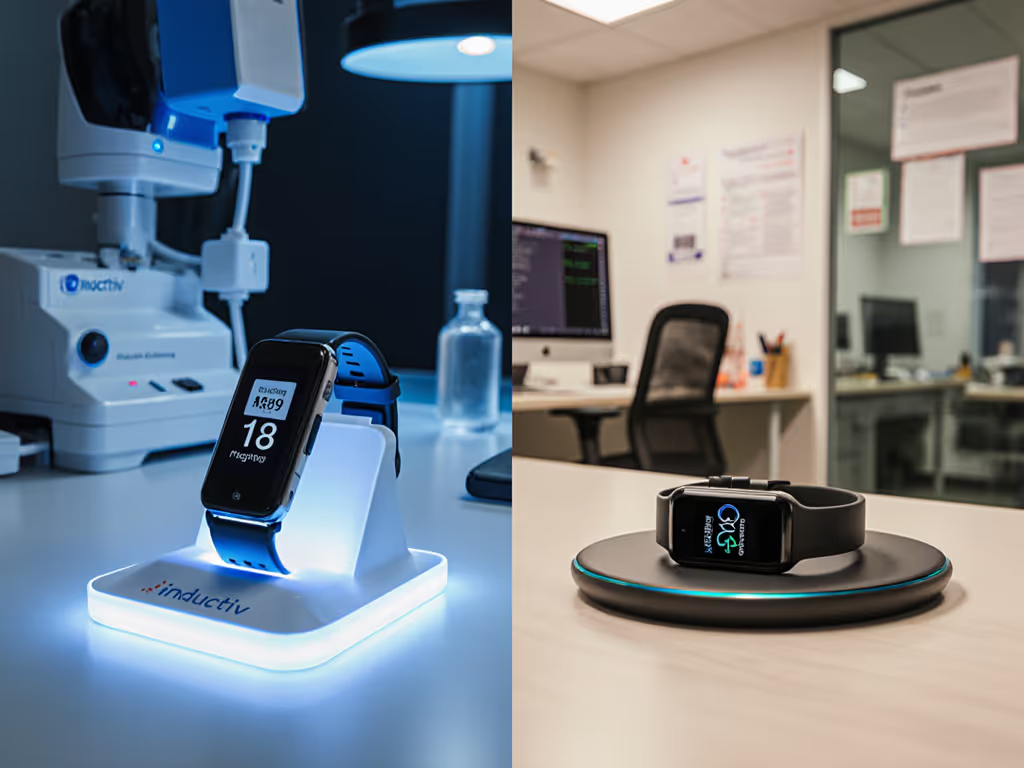
NFC Power Transfer: Low-Watt Tech for Rings & Sensors
By Javier Ortiz • 2nd Jan
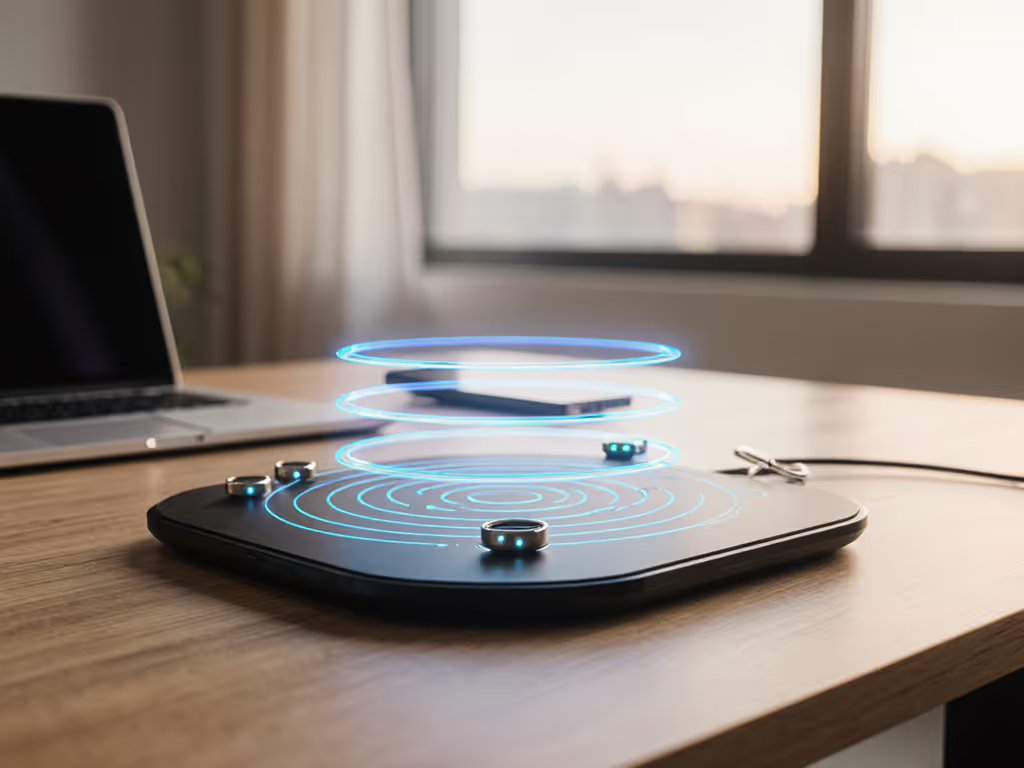
If you've ever juggled multiple chargers for your smart ring, fitness tracker, and location sensors, you're not alone. That cluttered drawer of tiny docks isn't just unsightly, it represents a fundamental mismatch between our small-wattage devices and our high-power charging expectations. The solution? NFC power transfer technology, the quiet hero making dedicated wireless charging pads for micro-devices finally practical. For device-specific tips on compact wearables, see our smart ring and wearable charging guide. I've helped hundreds of households streamline their charging flows, and the most elegant solutions always start with matching the power delivery method to the device's actual needs (not chasing maximum wattage).
Why NFC Beats Big-Power Chargers for Small Devices
We've been conditioned to equate "more watts" with "better charging," but this mindset creates unnecessary friction for devices needing just 50 milliwatts. Traditional Qi wireless chargers output 5-15W, massive overkill for a smart ring that only needs 0.05W. That excess power turns into wasted heat and battery degradation.
NFC power transfer operates differently. As a 13.56 MHz near-field communication protocol, it transfers power through magnetic induction over distances under 2cm. Unlike Qi:
- Lower power draw (max 1W vs Qi's 15W+) means minimal heat generation
- No alignment fuss (the coil field is designed for proximity, not precision)
- No wasted standby power since NFC only activates when devices touch
- Dual functionality (simultaneously transfers data and power, perfect for sensor updates)
The magic happens because NFC inherits RFID's passive power capability: one device creates a magnetic field that both powers and communicates with the receiving device. This makes it ideal for low-power wearables like the new generation of smart rings that monitor sleep biometrics without frequent recharging.
Step-by-Step: Building Your NFC Charging Ecosystem
Identify Your Micro-Power Devices
Audit your small tech that could benefit from NFC power transfer:
- Smart rings (like Samsung Galaxy Ring)
- Fitness sensors and trackers
- Bluetooth location tags (Tile, AirTag variants)
- Health monitoring patches
- Smart home sensors (temp, humidity, motion) If your sensors are spread throughout the home, compare NFC with RF wireless charging for smart sensors.
Devices needing under 1W of power gain the most from NFC charging, and look for specifications listing "NFC WLC" (Wireless Charging) compatibility.
Map Your Charging Zones
In hospitality, I learned that people won't use technology they don't understand. Map where your micro-devices naturally live during downtime:
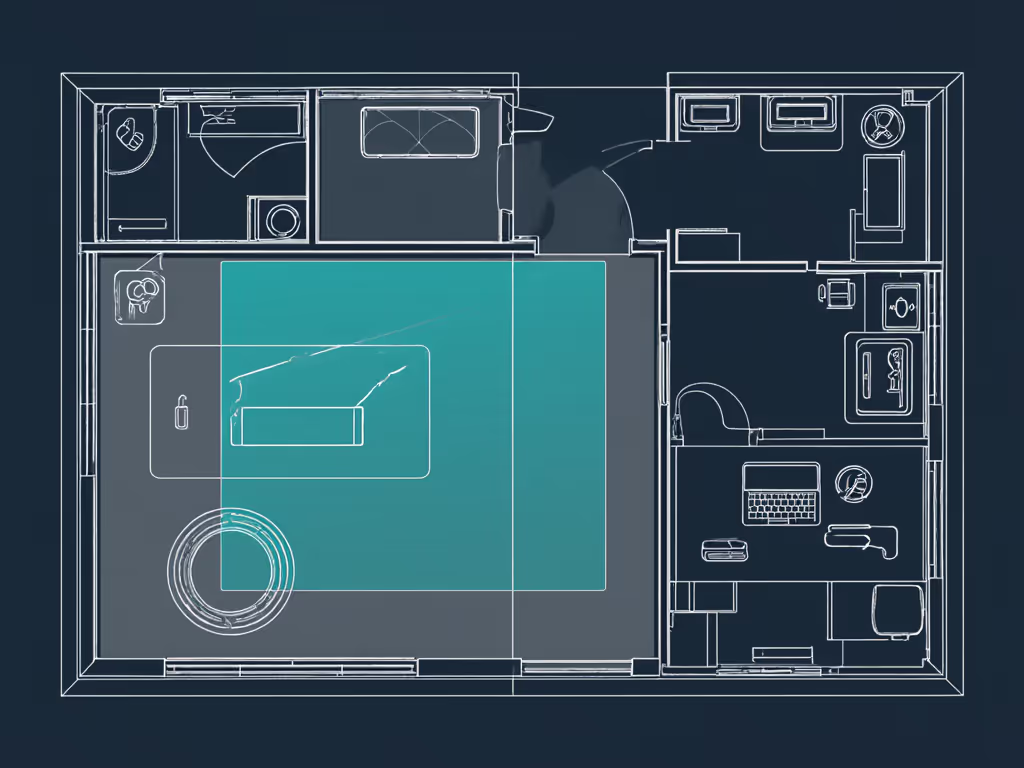
- Bedside: Place NFC pads on nightstands where rings go at night
- Entryway: Create a "sensor home base" near keys/wallet drop zones
- Workspaces: Position near desks where fitness trackers sit during office hours
- Kitchen: Location for health sensors that monitor nutrition
Select the Right NFC Charging Hardware
Not all NFC chargers handle power transfer equally. Look for NFC Forum Wireless Charging (WLC) 1.0 or 2.0 certification, this ensures actual power delivery capability beyond standard data NFC. While shopping:
- Verify 50mW-1W output range (perfect for rings/sensors)
- Check compatibility with your specific devices
- Prioritize designs with visual indicators (soft LED, texture) for intuitive placement
- Opt for flat, low-profile designs that blend with surfaces
Tidy the Power Flow
The cleanest setups hide infrastructure while making interfaces obvious. For NFC zones:
- Dedicate power sources: Use a single USB-A port on your existing nightstand charger
- Short cable runs: 6-inch braided cables prevent snarls (no Velcro needed)
- Surface-mount routing: Adhesive cable channels along furniture edges
- Color-match components: White charger + white cable on light surfaces
Unlike high-power Qi pads that need bulky adapters, NFC's low wattage means you can power multiple NFC chargers from a single USB port on your existing phone charger, eliminating another brick from your ecosystem.
Design for Guest Intuition
My biggest "aha" came when my parents visited and hesitated to charge their devices for fear of breaking our system. I added subtle visual cues:
- Silicone mats with cutouts for specific devices
- Matching wood/stone charging pads that blend with decor
- Engraved device silhouettes (ring, tracker, tag)
- Consistent placement left-to-right: phone → watch → ring → sensors
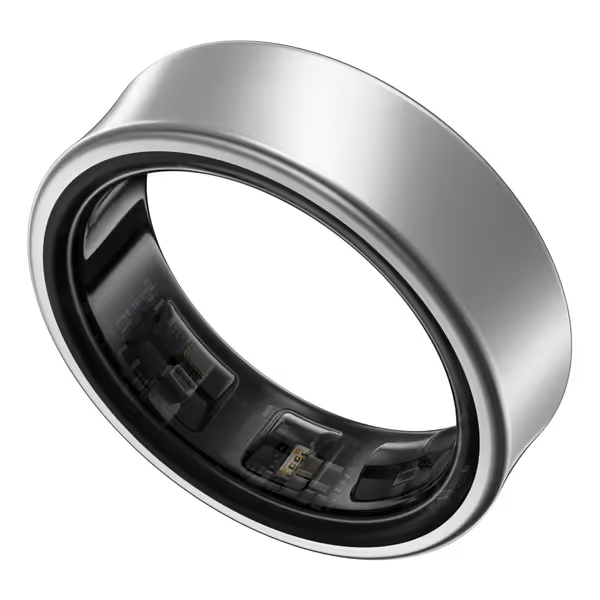
Samsung Galaxy Ring, AI Smart Ring
Seamlessly track health, fitness, and sleep right from your finger.
$399.99
Battery LifeUp to 7 Days
Battery LifeUp to 7 Days
Pros
Comfortable, lightweight design for 24/7 wear.
Comprehensive health monitoring: sleep, fitness, heart rate, cycle tracking.
Durable and water-resistant for everyday use.
Cons
Android only; sizing kit required before purchase.
Mixed reviews on battery longevity and connectivity.
Customers find the smart ring comfortable and appreciate its sleep tracking capabilities, particularly its ability to track heart rate variability at night. The ring receives positive feedback for its quality, with one customer noting it works well as a watch replacement.
Customers find the smart ring comfortable and appreciate its sleep tracking capabilities, particularly its ability to track heart rate variability at night. The ring receives positive feedback for its quality, with one customer noting it works well as a watch replacement.
Make the dock obvious. When guests see a single charging spot for each device category with matching materials, they instinctively know where things go (no instructions needed). This is why NFC zones work beautifully for small devices: they don't compete with your phone's high-power needs.
The Calm of Specialized Charging Zones
When you stop forcing everything through the same high-wattage portal, something remarkable happens: your charging ecosystem becomes self-explanatory. NFC power transfer solves the "tiny device dilemma" by meeting these devices where they live (literally, on your nightstand, in your entryway, or beside your coffee cup).
I've seen households transform their relationship with micro-tech when they:
- Stop trying to charge rings on phone pads
- Create dedicated NFC micro-zones that work at 10% of the power
- Match the charger's appearance to the room's aesthetic
The result? No more hunting for micro-USB cables. No more devices with 5% battery because they're "too small to bother charging." Just calm spaces where power has predictable, obvious homes.
Future-Proofing Your Small-Device Flow
As Qi2 and MagSafe dominate phone charging, NFC WLC will become the invisible backbone for the next wave of micro-wearables. For whole-home IoT, explore wireless power for battery-free smart homes. Start building your NFC zones now using these principles:
- Place NFC chargers near where devices naturally rest during downtime
- Keep cable runs short and visually harmonious
- Use consistent labeling/texture for intuitive placement
- Verify 1.0+ WLC certification for actual power delivery
The highest compliment I receive from clients isn't about speed, it's "My parents actually use this system." That's the power of matching the right technology to the right task, with placement that speaks louder than specs. When you recognize that not every device needs to charge like your phone, you unlock genuinely clutter-free living.
Ready to explore how NFC power transfer fits into your broader charging ecosystem? I've created a room-by-room checklist showing exactly where to implement NFC zones versus Qi charging. Download it to build a system that works for everyone in your household.
Related Articles