
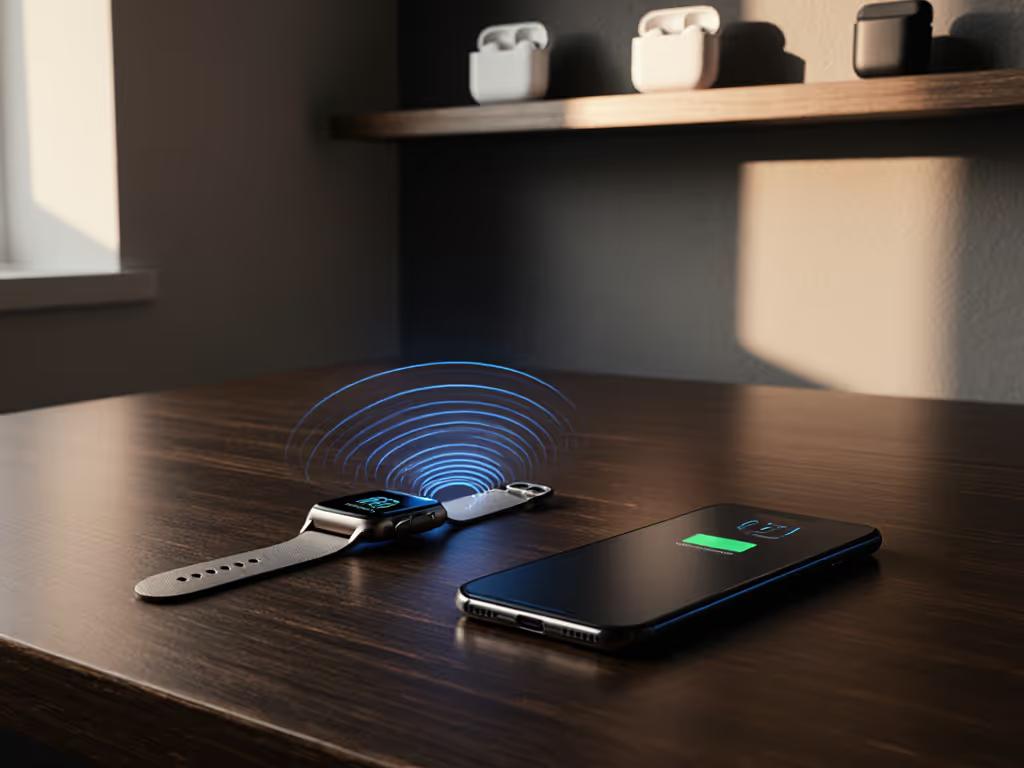
NFC Smartphone Charging: Build Your Unified Ecosystem
By Javier Ortiz • 27th Feb
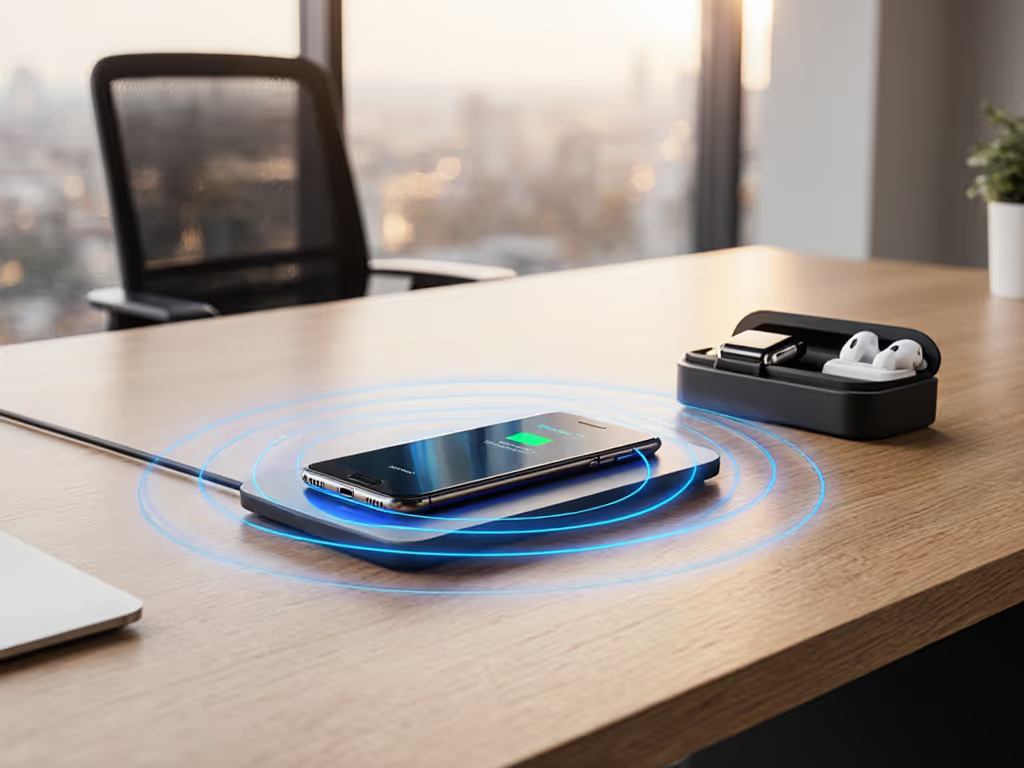
NFC charging ecosystem integration promises a cleaner, calmer approach to powering your devices, but only if you design it intentionally. Near Field Communication (NFC) smartphone power represents a shift away from the tangled cable economies that dominate most homes and offices. Unlike older wireless standards that require large antenna footprints, NFC delivers power over short distances using the same 13.56 MHz frequency that powers contactless payments, opening possibilities for small, low-power devices like earbuds, smartwatches, and fitness trackers to charge without proprietary docks. For a technical deep dive into how NFC powers miniature wearables, see our NFC power transfer guide.
The real breakthrough isn't the technology itself, it is how unified, zone-based charging design can transform your daily friction into flow. In my years designing room-by-room charging flows, I've learned that clarity and placement trump raw specs in daily life. Calm spaces emerge when power has predictable, obvious homes.
Understanding NFC Wireless Charging: The Foundation
NFC wireless charging operates through electromagnetic induction. When an active device (typically your smartphone) comes within two inches of a passive device or tag, it generates an electromagnetic field that powers the receiving component and transfers data. The technology transfers up to 1W of power for charging small, battery-constrained devices, though current smartphone implementations typically deliver 50 milliwatts, sufficient for smart locks, sensors, and low-drain wearables.
What makes NFC distinct from Qi or MagSafe isn't raw wattage, it is compactness and dual-purpose design. If you're weighing broader standards, our MagSafe vs Qi comparison clarifies alignment, speed, and accessory ecosystem trade-offs. The same antenna that enables secure payment or device pairing also harvests power. This convergence is crucial: your charging infrastructure becomes part of your ecosystem authentication, not a separate system.
The range is intentionally short (roughly 4 inches) because proximity is a security feature, not a limitation. You tap, confirm, and disconnect, no lingering connection, no accidental interceptions.
Map Your Zones: Designing Your Ecosystem
Built-in visual checklists and zone mapping prevent the overwhelm that kills most charging setups. Rather than assuming one universal charger works everywhere, I recommend dividing your home and work into charging zones, each serving a distinct function. To integrate charging cleanly into work surfaces, see our guide to wireless charging desk mats.
Primary Power Zones:
- Nightstand (silent, low-light, passive-only devices)
- Desk / workspace (active multi-device, always accessible)
- Kitchen / entry point (high-traffic, guest-visible)
- Vehicle (mount-stable, heat-resistant)
- Travel kit (minimal, modular, one-brick)
For each zone, define what devices it serves and which operating modes matter. Does your nightstand need to support smartphone and earbuds simultaneously, or are they sequential? Your desk might support active peer-to-peer mode between two devices, while your guest bathroom functions in passive-only, card-emulation mode.
This zoning approach emerged from a real lesson: when I designed a charging setup for my parents' guest room, they were anxious about accidentally misplacing their phones and missing the sweet spot, so we added a discreet marker and a short note to tap at the logo. Within a day, everything felt effortless.
Related Articles