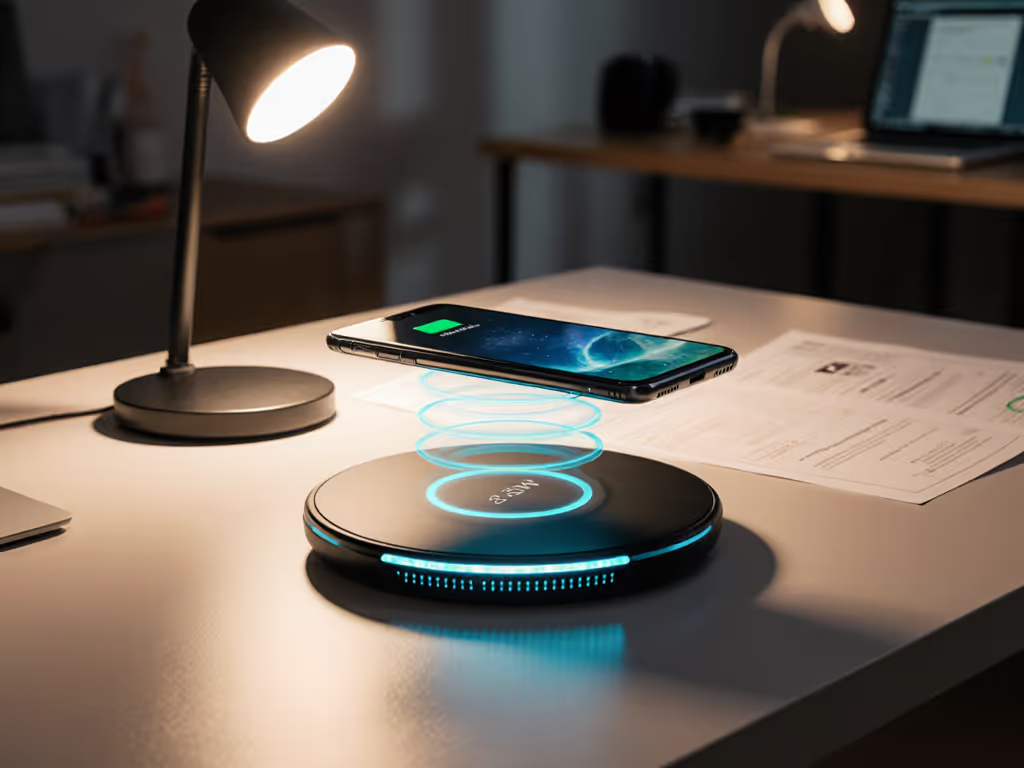
Adaptive Power Delivery: How AI Keeps Batteries Cool
By Asha Raman • 27th Mar
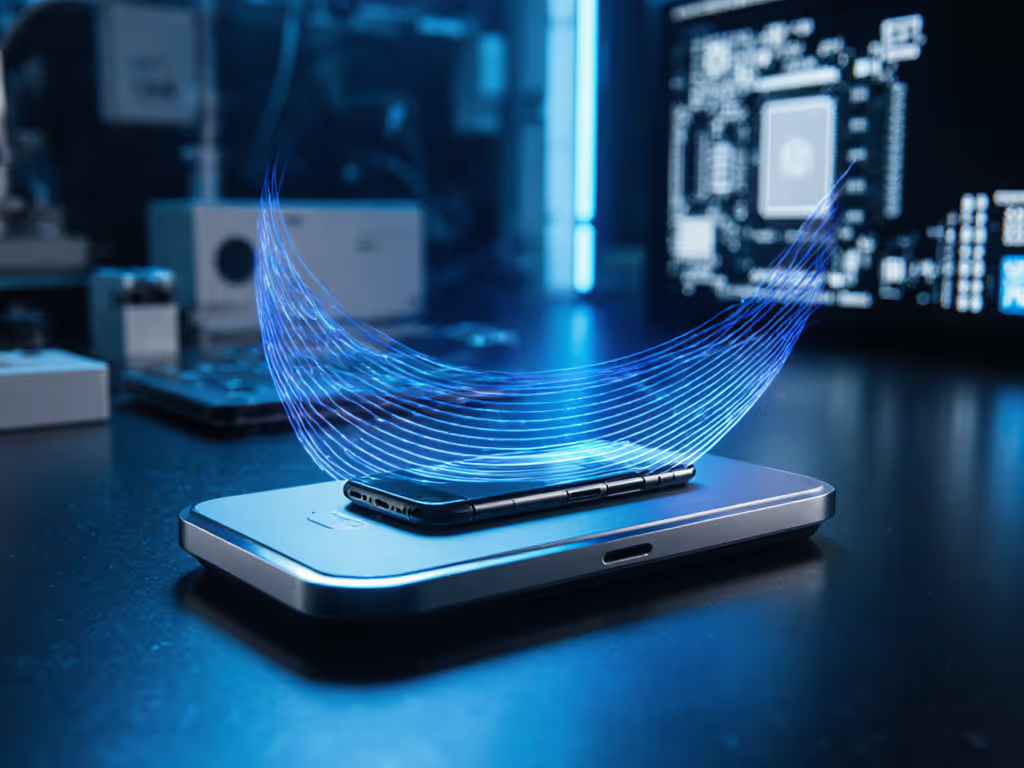
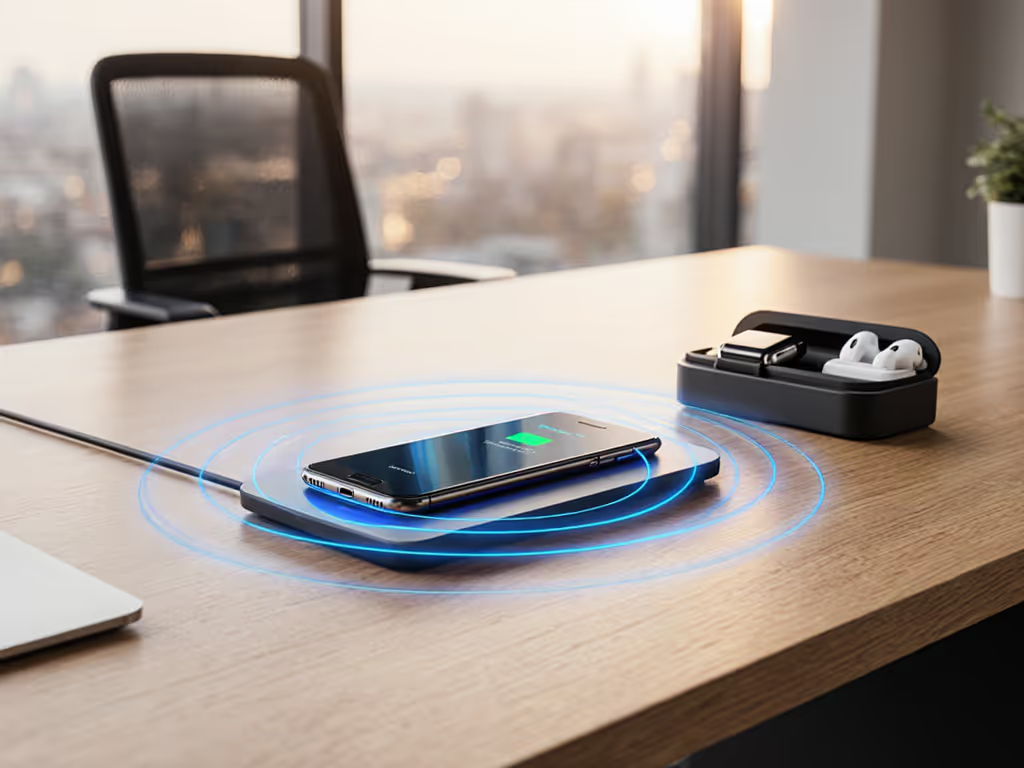
Wireless charging has evolved beyond simple power transfer. Modern standards like adaptive power delivery now employ real-time intelligence to optimize charging speed while actively protecting battery health, the cornerstone of longevity. Understanding how AI-driven charging systems work, and why keeping batteries cool matters more than chasing maximum wattage, helps you make smarter charging choices.
How Does Adaptive Power Delivery Actually Work?
Adaptive power delivery is a dynamic system in which the charger communicates continuously with your device to adjust power output in real time. Rather than pushing a fixed wattage throughout the charging cycle, the charger "learns" your device's thermal state, battery capacity, and charge history.
At the hardware level, Qi2 and its successor Qi2.2 enable chargers to read battery health, charge cycles, and other nuances from your device. The charger's firmware then negotiates the optimal power level, sometimes ramping up during the bulk charging phase and tapering down as the battery approaches full capacity. This isn't new physics; it's intelligent orchestration of existing electromagnetic induction principles.
Protect the pack, and performance naturally lasts the distance.
The precision matters. Qi2.2, finalized in 2025, tightens power negotiation protocols and adds formal thermal monitoring into certification standards. This means a certified Qi2.2 charger doesn't just deliver 25W (it verifies that your device can safely receive it without thermal stress). If your phone is warm or the ambient temperature is high, the system throttles automatically.
Why Is Thermal Control Tied to Battery Longevity?
Lithium-ion batteries degrade faster at elevated temperatures. A battery held at 35°C will retain significantly more capacity after 500 charge cycles than one repeatedly charged at 45°C. Each degree above 40°C compounds the problem: chemical reactions accelerate, and the battery's ability to hold charge diminishes.
I once road-tested a bargain fast-charging mount on a summer drive. The phone climbed above 43°C, navigation stuttered, and the battery estimate plummeted from 80% to 40% in minutes. The culprit wasn't the charger alone; it was the combination of high ambient heat, aggressive power delivery without thermal sensing, and no intelligent throttling. For safer in-car setups, see our vent vs dashboard mount comparison covering heat, stability, and charging performance. Spending an hour troubleshooting in a parking lot taught me that keep it under 40°C when possible isn't just comfort advice; it's chemistry.
AI-optimized wireless chargers address this by monitoring internal temperature sensors in real time. If the battery approaches unsafe thresholds, the system cuts power delivery before damage occurs (trading a few minutes of charge time for months of preserved battery capacity).
What Role Does Machine Learning Play in Smart Power Management?
Modern wireless charging systems employ machine learning in two ways: predictive and reactive.
Predictive optimization uses charge history and environmental telemetry. The charger learns your typical charging patterns (does it charge overnight, during work commutes, or during video calls?). AI-optimized wireless systems can schedule lower power delivery during high-stress periods (like intensive navigation or video recording) and ramp up during idle times.
Reactive thermal management monitors real-time temperature and battery state-of-charge. As your device heats up, the charger intelligently reduces wattage. Qi2.2's formalized thermal monitoring means this throttling is standardized across brands, not a proprietary guessing game.
The result is genuine machine learning in charging: the system adapts, not because you fiddled with settings, but because the charger and device exchange data and make collaborative decisions.
Why Doesn't Every Auto Wireless Charger or Charging Pad Offer This?
Older Qi-standard chargers lacked the communication layer to read battery health and thermal state. They simply pushed power at a fixed rate. An auto wireless charger using the basic Qi standard has no way to know if your phone is dangerously warm; it keeps transmitting.
Qi2, introduced in 2023, formalized the authentication and compatibility framework that makes adaptive delivery possible. Qi2 chargers must undergo certification; they're required to communicate with devices and respond to battery signals. Certified Qi2 and Qi2.2 products undergo rigorous testing to ensure thermal safety, power delivery accuracy, and foreign object detection.
Uncertified or budget chargers often skip this layer, offering "speed" without safeguards. The appeal is obvious, and risky. When you see a wireless charger advertised as 20W or 30W without certification marks or thermal monitoring claims, it's often a static transmitter with no adaptive capability.
What's the Practical Difference Between Qi2 and Qi2.2 Adaptive Features?
Qi2 introduced the Magnetic Power Profile, enabling magnetic alignment with ±1 mm precision. For a deeper breakdown of how the newer spec improves cooling and speed, read our Qi2.2 vs Qi2 analysis. This reduced coil loss and standardized 15W magnetic wireless charging across brands.
Qi2.2 refines this further. The updated Magnetic Power Profile tightens alignment to ±0.5 mm, improves thermal monitoring, and raises power to 25W while keeping safety as the anchor. Importantly, a phone reaching 50% charge in roughly 30 minutes under optimal conditions still does so without heat spikes because the charger's firmware is actively managing power negotiation.
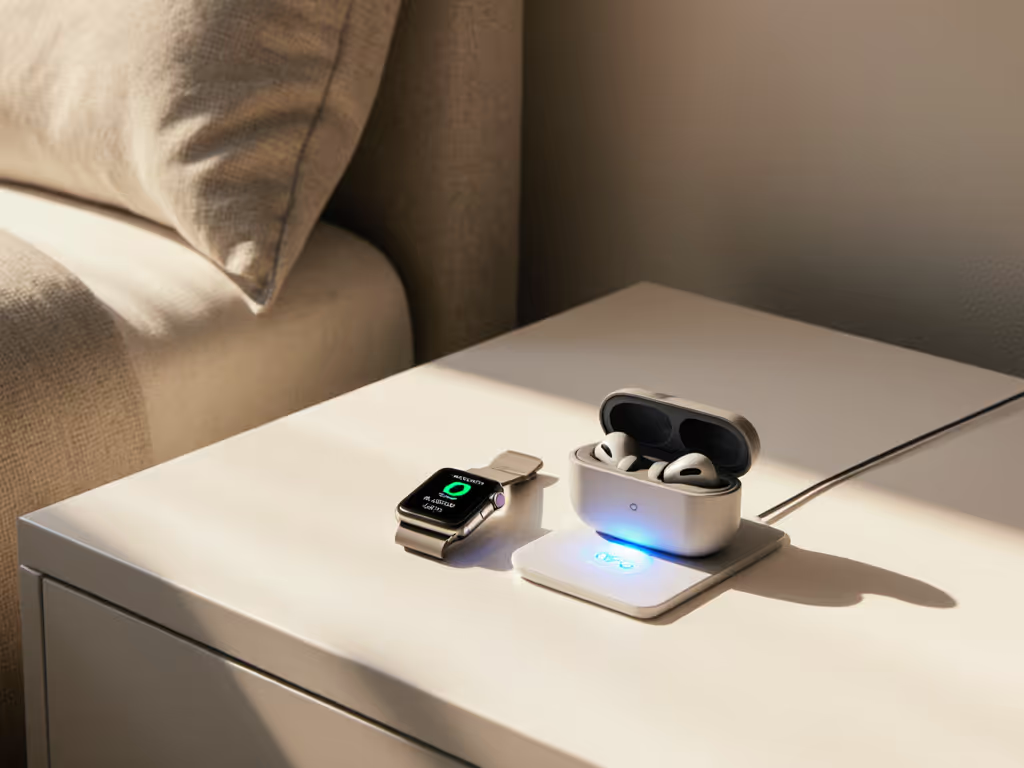
In plain terms: Qi2.2 is Qi2 with tighter thermal guardrails and faster, safer 25W delivery. If you're buying a new auto wireless charger or nightstand pad today, Qi2.2 certification is your assurance that adaptive power delivery and thermal protection are built in, not an afterthought.
How Do I Know If My Device and Charger Actually Support Adaptive Delivery?
Look for three markers:
- Certification label: Qi2 or Qi2.2 marks from the Wireless Power Consortium. This is your proof that the charger has undergone testing for power accuracy, thermal safety, and device communication.
- Magnetic alignment: Modern Qi2/Qi2.2 chargers explicitly mention the Magnetic Power Profile. This ensures coil precision and reduces energy waste.
- Thermal monitoring claims: Reputable manufacturers will state that the charger monitors temperature and adjusts power delivery. Vague claims like "intelligent" or "smart" without specifics are red flags.
Device-side, iPhones (iPhone 12 and later) and select Android flagships (Samsung Galaxy S, Google Pixel 6 and later) support Qi2 and Qi2.2. Older devices may charge on Qi2 pads at legacy Qi speeds without triggering advanced adaptive features. To avoid counterfeits and confirm features like thermal monitoring, follow our guide to the Qi2 certification process.
Can Adaptive Power Delivery Actually Replace Wired Fast Charging?
Qi2.2's 25W brings wireless very close to entry-level wired charging speeds. See our evidence-based wireless vs wired comparison for daily-use trade-offs on speed, heat, and longevity. For daily charging (whether on a nightstand, at a desk, or via an auto wireless charger), adaptive wireless now rivals wired in real-world time-to-charge, and with superior thermal management because the entire process is monitored and regulated.
However, top-tier wired fast charging (65W+) still outpaces wireless. The trade-off is deliberate: wireless adaptive delivery prioritizes longevity and safety over peak speed. For overnight, all-day, and travel charging, Qi2.2 adaptive delivery is often the better choice for battery health.
What's the Bottom Line for Battery Protection?
Adaptive power delivery using AI and real-time thermal sensing represents a maturation of wireless charging. The charger is no longer dumb; it's a partner in your device's battery health.
By choosing Qi2 or Qi2.2 certified chargers (whether for your nightstand, car mount, or office desk), you ensure that power delivery adapts to your device's needs, heat is actively managed, and your battery retains capacity far longer than it would under aggressive, unmonitored charging.
Further exploration: Investigate the Qi2.2 certification list on the Wireless Power Consortium website to verify your next charger purchase. Compare thermal-monitoring datasheets from manufacturers. Test your current setup with a thermal imaging app to see if your charger maintains device temperature below 40°C during typical charging. These steps transform charging from a convenience into an informed, protective practice.
Protecting the pack isn't glamorous, but it ensures performance lasts the distance.
Related Articles