Lunar Wireless Power: Drone Charging Beyond Moon Shadows
By Javier Ortiz • 20th Jan
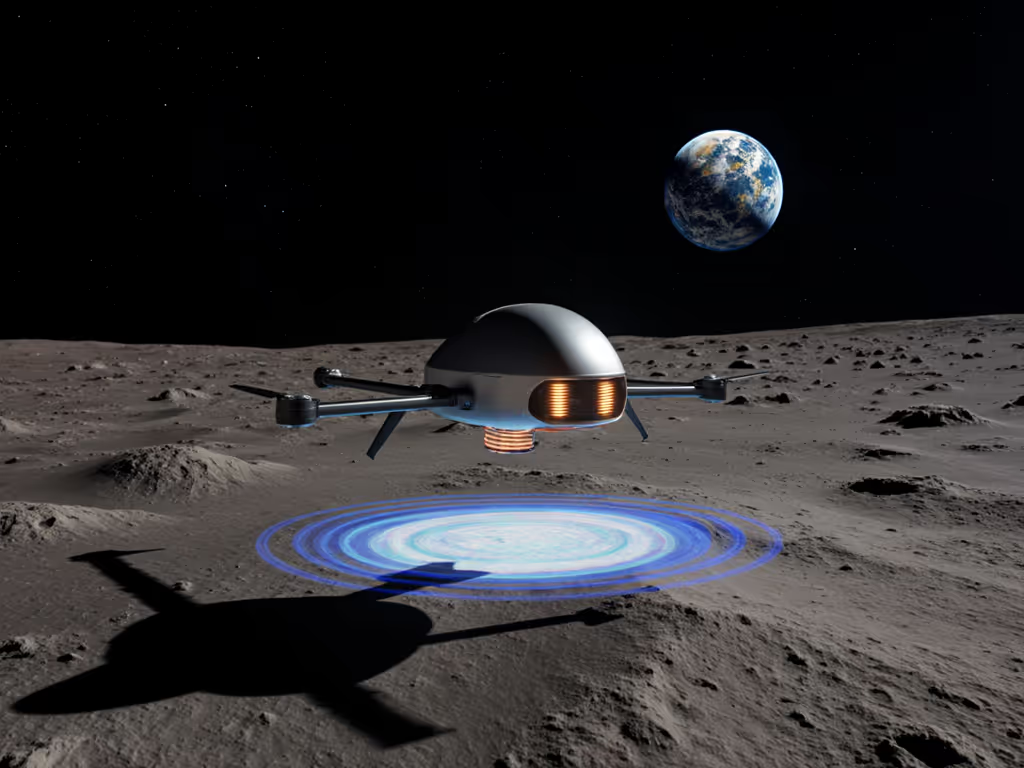
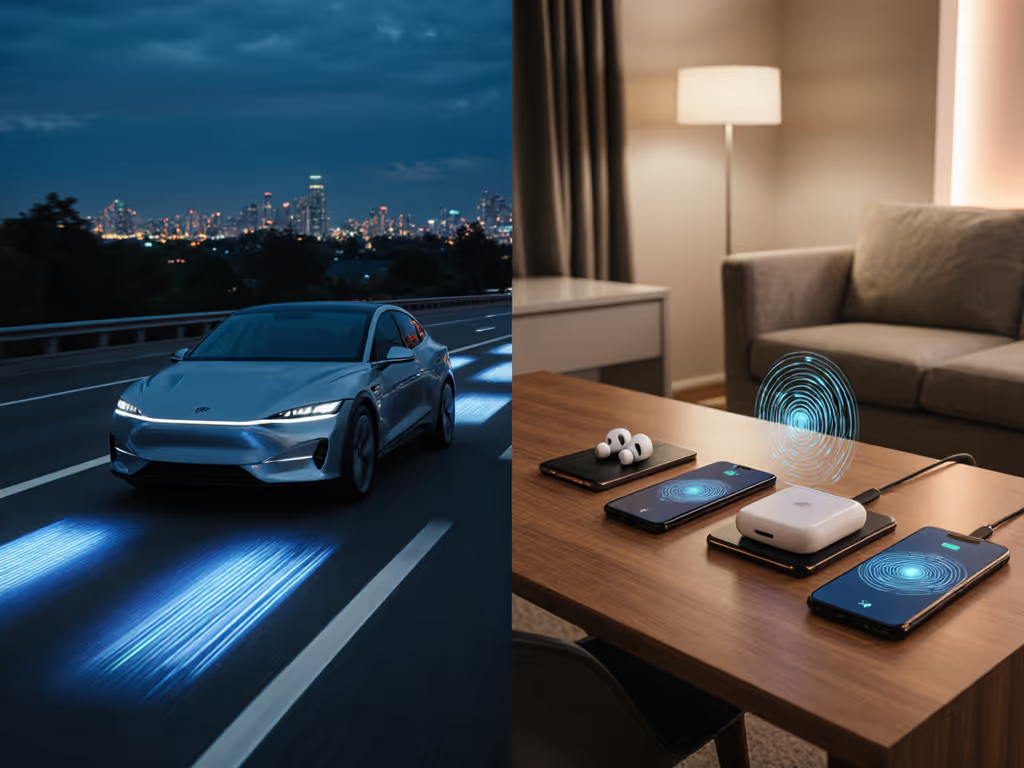
When you imagine lunar wireless power, you're probably not thinking about your nightstand clutter. But as engineers solve satellite-to-drone charging challenges for the Moon's 14-day nights, they're uncovering principles that reshape how we organize power on Earth. The same dust-proof efficiency that keeps lunar rovers alive could finally fix the inconsistent charging pads keeping you awake at 2 AM.
Calm spaces emerge when power has predictable, obvious homes. This truth holds whether you're designing for lunar regolith or your Airbnb guest room. As someone who's mapped charging flows from Silicon Valley apartments to Tokyo hotels, I've learned that raw wattage ratings matter far less than intentional placement, especially when the environment fights back.
Why Your Wireless Charger Fails (and Why Moon Missions Almost Did)
Earth-bound frustrations mirror space challenges in surprising ways:
- Dust vs. regolith: Your phone case collects pocket lint that disrupts alignment, just as lunar dust jams traditional connectors
- Thermal limits: That warm pad under your iPhone mirrors how lunar equipment must survive -173°C nights
- Guest confusion: Visitors fumbling with chargers parallels astronauts needing foolproof systems during high-stress missions
Astrobotic's recent breakthrough with WiBotic demonstrates this perfectly. For mission context, see NASA's lunar wireless charging program moving from lab validation to flight readiness. Their lunar wireless power system survived 4 cm of simulated moon dust without performance loss, proof that eliminating physical connectors solves universal pain points. When your parents hesitate to charge their phones at your house (like mine did), it's the same anxiety astronauts feel with unfamiliar equipment.
Clarity and placement trump raw specs in daily life, whether you're surviving lunar night or welcoming guests.
The Hidden Cost of "Just Works" Promises
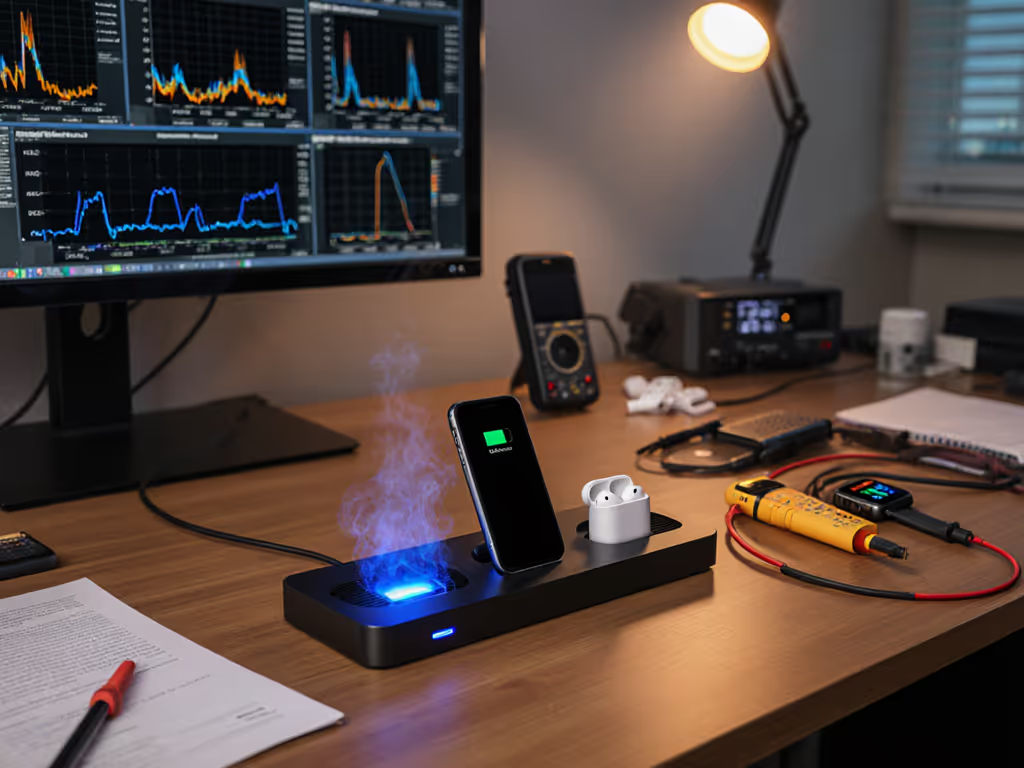
We've all bought wireless chargers that throttle speed or overheat. Companies promote "15W fast charging" while omitting critical details:
- Power source requirements: Needs 20 W+ GaN adapter (not included)
- Case compatibility: Only works with cases under 3 mm thick
- Thermal throttling: Slows after 20 minutes when covered by phone
NASA faced identical challenges. Early lunar prototypes failed because engineers focused on transfer efficiency while ignoring real-world variables like regolith accumulation. As Masoud Arabghahestani, Astrobotic's thermal lead, noted: "Passing acceptance testing means meeting rigorous environmental requirements, not just lab conditions."
Designing Systems That Actually Work
Zone Mapping: Your First Step to Power Harmony
Stop buying random chargers. Instead, create power zones like lunar mission planners:
| Zone Type | Power Budget | Critical Details |
|---|---|---|
| Nightstand | 15W total | Must run silent/no LEDs; keep within 12" of outlet |
| Kitchen Dock | 20W total | Waterproof mat; label "Watch Here"/"Phone Here" |
| Guest Area | 25W total | Match cable colors to device; add Qi2 symbol stickers |
Label beats lecture. When I designed my parents' guest room, color-coded pads with matching cable weaves eliminated their anxiety about "breaking" chargers. They instinctively knew where each device belonged, just like astronauts relying on Astrobotic's standardized lunar wireless power system.
Future-Proofing for Qi2 and Beyond
The new lunar standard isn't just for astronauts. Astrobotic's 125W system (now commercially available) pioneered techniques that will transform consumer tech:
- Material science: Dust-resistant coils that maintain efficiency through debris
- Adaptive tuning: Automatic power adjustment for different battery types
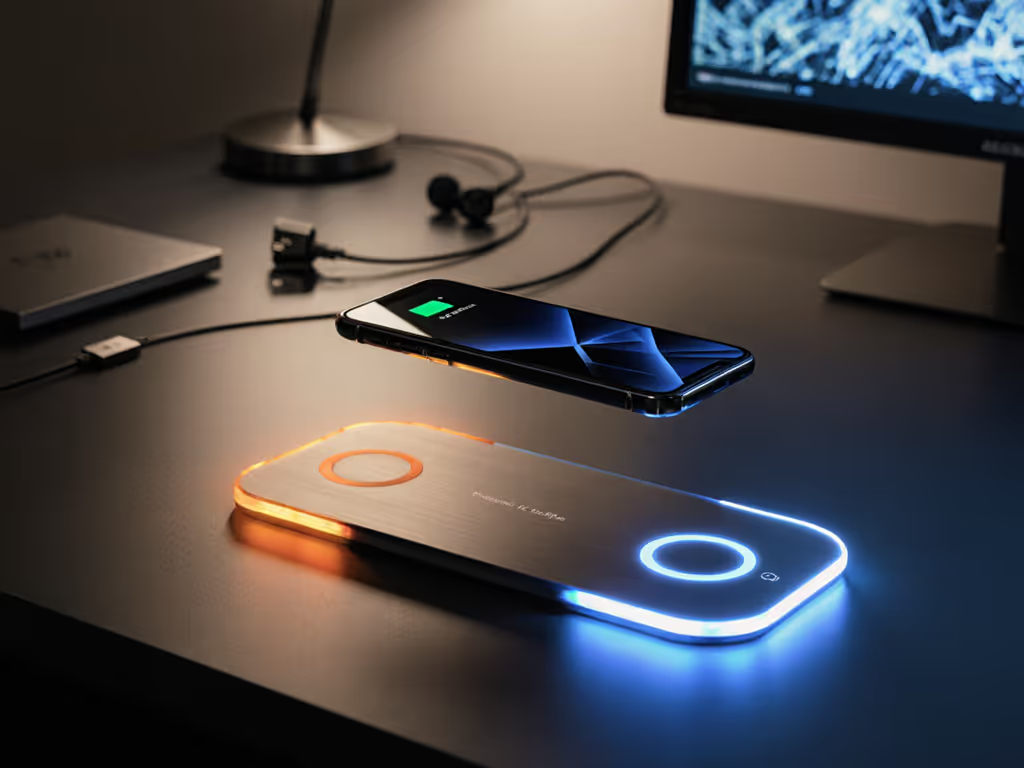
- Indirect alignment: Tolerates minor positioning errors (no more hunting for "sweet spots")
These innovations directly address your pain points. That "inconsistent performance" you experience? Lunar engineers solved it by decoupling power transfer from perfect coil alignment. When Qi2 accessories arrive, your properly zoned setup will seamlessly accommodate them, no need to replace everything. Before upgrading, learn how to verify genuine Qi2 compliance to avoid counterfeits.
Bringing Space-Quality Calm to Your Home
The 3-Step Guest-Ready Framework
- Identify power anchors: Find natural docking spots (bedside tables, entryway consoles)
- Standardize cable paths: Route all cables behind baseboards or furniture legs
- Add visual cues: Use matching adhesive labels for each device type (e.g., blue for watches)
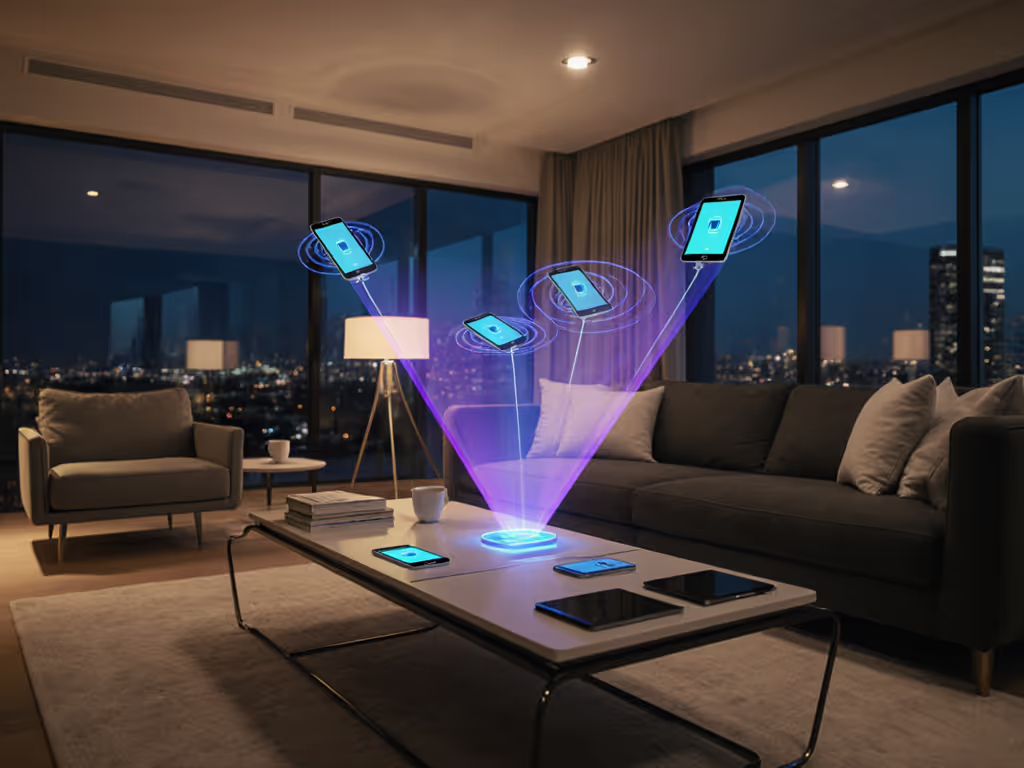
This mirrors how Astrobotic designed satellite-to-drone charging for the Moon. On Earth, compare drone wireless charging solutions to see which trade-offs matter for alignment, heat, and uptime. Their VSAT platforms create predictable power zones, exactly what your Airbnb guests need when they arrive at midnight with dead phones.
Nightstand Nirvana Checklist
✅ Dimmable or no LEDs (use smartphone light sensor test) ✅ Ventilated base to prevent thermal throttling ✅ 6-12" cable reach to outlet (no stretching) ✅ Case-friendly clearance (test with your thickest case) ✅ Dedicated watch spot (avoids magnet interference)
Remember: The most expensive charger fails if placed poorly. I've seen $100 MagSafe pads abandoned because they made phones overheat during video calls, while simpler $15 pads in better locations delivered reliable all-night charging.
Your Power Journey Continues
As Astrobotic's lunar wireless power system prepares for flight, consider how space-grade reliability could transform your home. The same principles that keep rovers exploring moon shadows can finally solve your charging chaos. When satellite-to-drone charging becomes commonplace in space, we'll all benefit from the trickle-down tech, especially in how we design for human behavior.
Start small: Map one room's charging flow this week. Identify where dust (or pocket lint) disrupts connections. Create zones with clear visual cues. You'll discover that calm spaces emerge when power has predictable, obvious homes, whether you're docking an iPhone or a lunar rover.
Further Exploration:
- Track WiBotic's space applications developments for future Qi2 inspiration
- Experiment with cable routing tricks from NASA's thermal management guides
- Join the conversation about how space innovations reshape our daily tech interactions
Javier Ortiz is a former hospitality operations lead turned home-tech organizer. His room-by-room charging flows have calmed spaces from Dubai penthouses to Brooklyn brownstones. When not optimizing power paths, he's testing how new standards like Qi2 will reshape guest-friendly ecosystems.
Related Articles