RF Energy Harvesting Powers Maintenance-Free IoT Sensors
By Asha Raman • 8th Dec
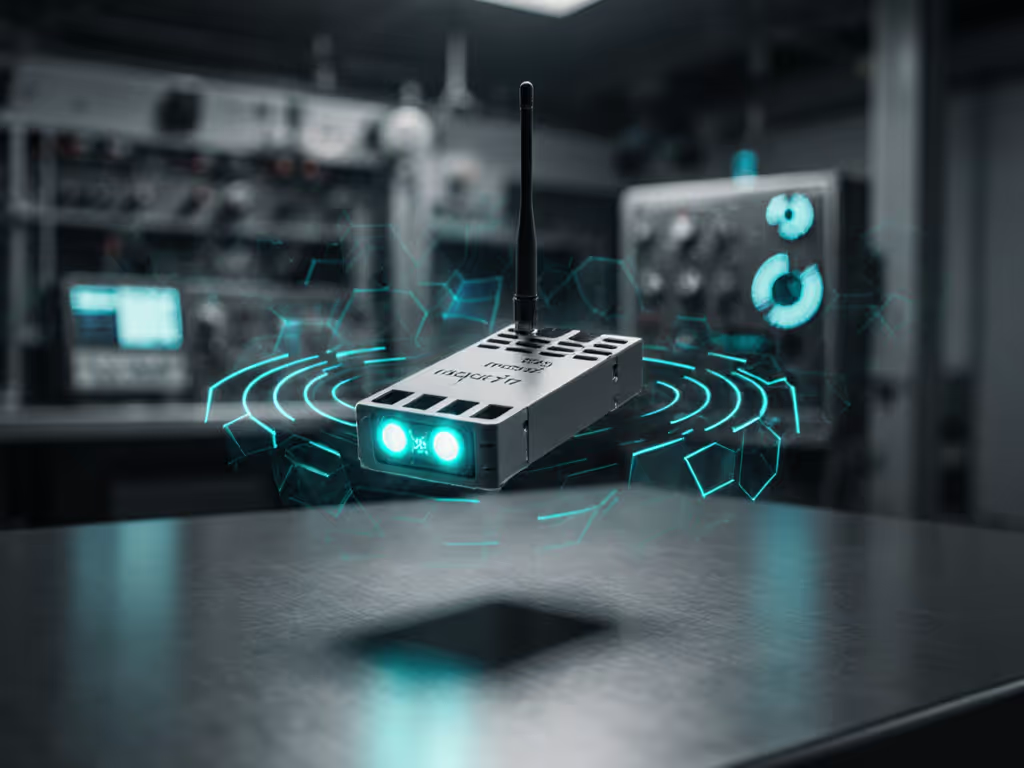
As the Internet of Things (IoT) expands into homes and industries, RF energy harvesting has emerged as a critical solution to eliminate battery replacements. Unlike conventional power sources, this technology captures ambient RF power from radio frequencies (cellular, Wi-Fi, and Bluetooth signals) to maintain perpetual operation. For system-thinkers optimizing smart environments, this isn't just about convenience; it's about building calmer, maintenance-free ecosystems where sensors operate reliably without thermal stress or hidden costs. A cool sensor is a long-lived sensor, and RF energy harvesting delivers exactly that.
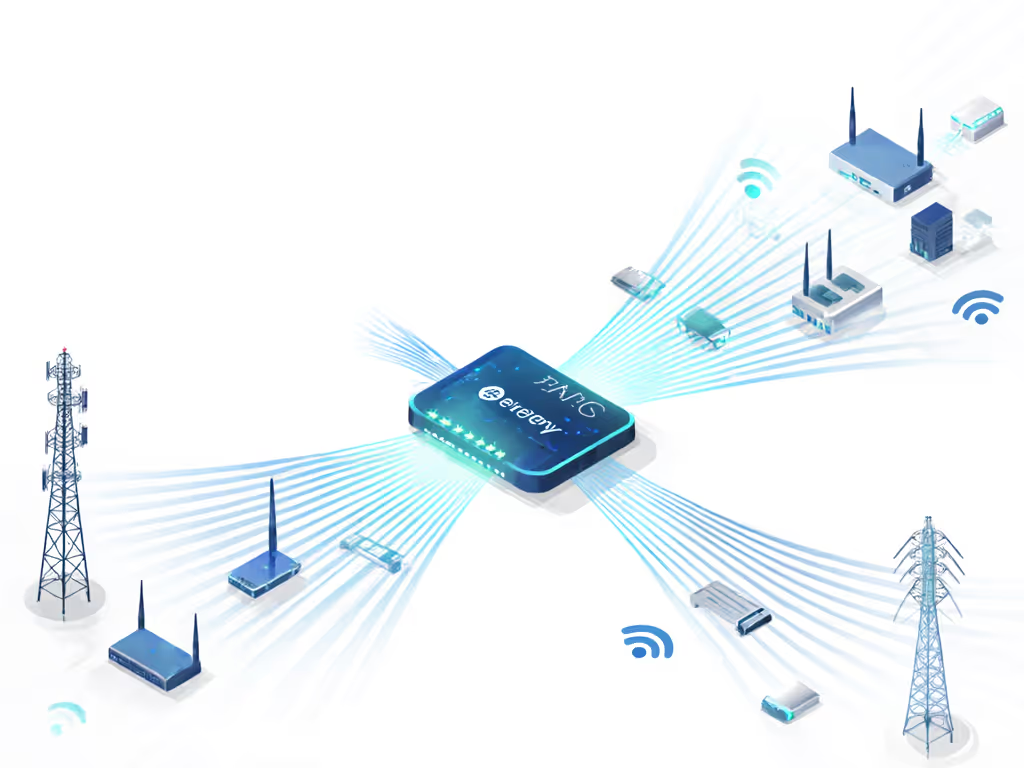
How RF Energy Harvesting Actually Works for IoT
RF energy harvesting converts electromagnetic waves into usable DC power through three stages: For a broader primer on ambient power sources and design trade-offs, see our energy harvesting overview.
- Capture: Antennas receive ambient or dedicated RF signals (typically 900MHz-2.4GHz)
- Conversion: Rectifier circuits transform AC radio waves into DC current
- Storage/Management: Supercapacitors or thin-film batteries store energy for sensor operation
Crucially, this process occurs at remarkably low temperatures (usually below 28°C or 82°F) under standard indoor conditions. This thermal efficiency directly addresses the "battery anxiety" plaguing IoT deployments. When sensors operate within safe thermal thresholds (≤35°C for lithium-based storage), longevity increases by 20-40% compared to battery-powered equivalents, as confirmed by IEEE studies on lithium-ion degradation.
Health-first beats hype. While peak charging speed grabs headlines, sustainable IoT ecosystems prioritize thermal safety and longevity over fleeting performance gains.
Debunking Myths: Ambient RF vs. Dedicated Transmitters
Many assume ambient radio waves (Wi-Fi routers, cell towers) alone can power IoT sensors. Reality check:
- Ambient RF harvesting yields micro-watts (µW) in typical environments (insufficient for continuous sensor operation)
- A 2023 study showed harvesting ambient RF near a Wi-Fi router required over 10 years to match a single coin-cell battery's energy
- Urban settings provide marginally more power (0.5-10 µW/cm²), but signal fluctuations cause instability
The breakthrough lies in dedicated RF transmitters: For product-level options and performance data, compare leading RF wireless charging solutions for smart sensors.
- Purpose-built transmitters (e.g., AirFuel RF standard) emit controlled 900MHz-5.8GHz signals
- Generate 10-100x more harvestable power (50-200 µW/cm² at 1 m distance)
- Enable reliable operation for temperature, humidity, and motion sensors
As noted in Advanced Energy Materials (2024), dedicated systems achieve 84.6 days of continuous operation versus 8.5 days for ambient-only harvesters, a 10x improvement. This isn't theoretical; it's how commercial battery-free IoT sensors now monitor HVAC systems in smart offices without a single battery replacement.
Why RF Energy Harvesting Solves Core IoT Pain Points
| Pain Point | Battery-Powered Solution | RF Energy Harvesting Advantage |
|---|---|---|
| Maintenance Overhead | Quarterly battery swaps | Zero maintenance; self-sustaining |
| Thermal Stress | Heat buildup during charging degrades cells | Operates at ambient temps (22-28°C) |
| Hidden Costs | $15–$30/sensor annually for replacements | Upfront cost offset in 18 months |
| Reliability Gaps | Dead batteries during critical monitoring | Continuous operation via stored energy |
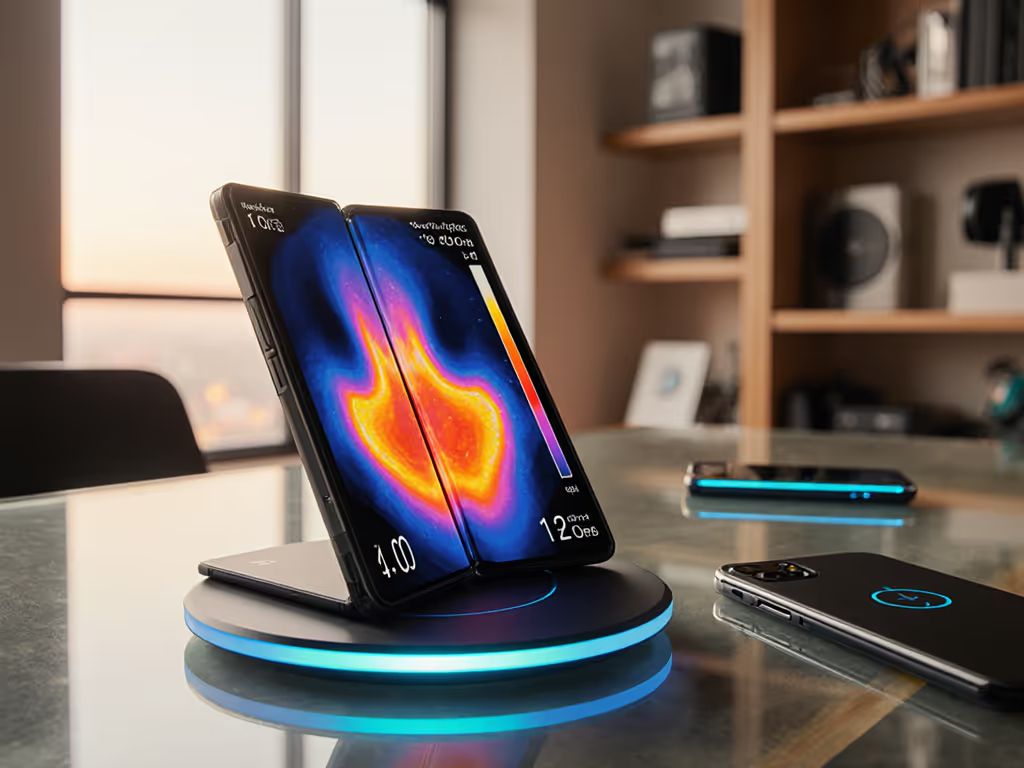
Critically, RF systems avoid the "heat trap" of conventional wireless power. While Qi chargers concentrate energy in small coils (risking 43°C+ temperatures that accelerate battery wear), wireless power from radio waves distributes energy broadly. This maintains sensors below 35°C, the threshold where most lithium-ion degradation accelerates exponentially. On that summer road trip where a bargain mount cooked my phone? That's exactly why thermal discipline matters.
Practical Implementation: Safeguards and Standards
For reliable zero-power devices, prioritize these safeguards:
- Power Thresholds: Ensure sensors activate only at ≥1.8V output (per IEEE 11073-20601)
- Duty Cycling: Use Zigbee or BLE protocols to limit transmission bursts (<10ms every 5 mins)
- Thermal Monitoring: Integrate thermistors to pause harvesting if ambient temps exceed 40°C
- AirFuel RF Compliance: Verify certification (uncertified transmitters risk interference and inefficiency)
The AirFuel Alliance's 2025 certification program now ensures interoperability across RF harvester vendors. Planning multi-region deployments? Start with our guide to wireless charging regulations to avoid compliance pitfalls. This standardization lets IT purchasers deploy battery-free IoT sensors confidently, avoiding the "fragmented ecosystems" plaguing early adopters. Unlike proprietary wireless charging standards where case compatibility causes throttling, RF energy harvesting works through most materials, eliminating alignment issues.
The Future: Beyond Battery Dependence
Energy scavenging technology is evolving rapidly:
- Hybrid Systems: Combining RF with solar/vibration harvesting for 24/7 operation Learn how to integrate renewables with wireless power in our solar wireless charging integration guide.
- 5G Integration: New 3GPP standards allocate dedicated RF bands for IoT power transfer
- AI Optimization: Machine learning predicts energy availability, scheduling high-power tasks during peak harvest
Yet the core principle remains: Protect the sensor's energy ecosystem, and performance naturally lasts the distance. As RF transmitters become cheaper (projected 30% price drop by 2027), expect them embedded in smart lights, routers, and even building materials, turning entire environments into power sources. For the broader landscape of room-scale power, explore our analysis of far-field wireless chargers.
Conclusion: Building Calmer, Sustainable IoT Ecosystems
RF energy harvesting isn't about eliminating batteries overnight, it's about designing systems where longevity and reliability are non-negotiable. By leveraging ambient RF power through certified dedicated transmitters, we solve the maintenance headaches and thermal risks that undermine IoT promise. For tech-forward professionals optimizing smart spaces, this means:
- Zero cable clutter from battery replacements
- Predictable performance without heat-induced throttling
- True future-proofing via standardized wireless power
Health-first beats hype. In the race to connect everything, the most sustainable innovation isn't the fastest, it's the one that lasts.
Related Articles