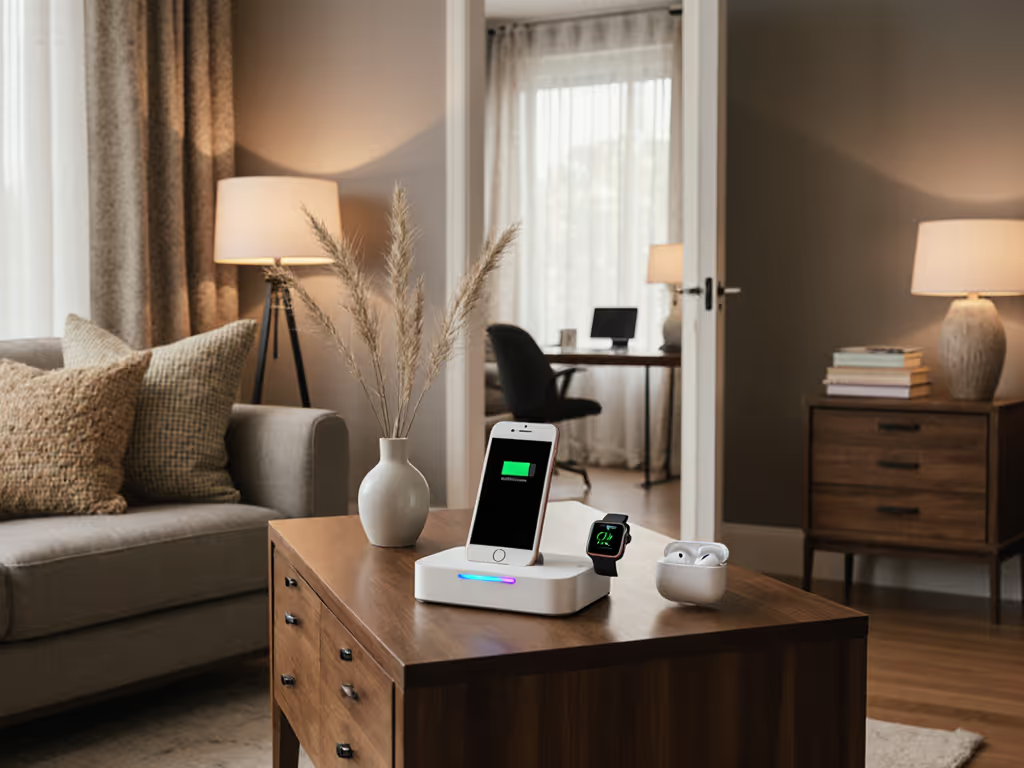
Dual Wireless Chargers: Qi2.2 & NFC Setup
By Sanaa El-Belkhi • 23rd Mar
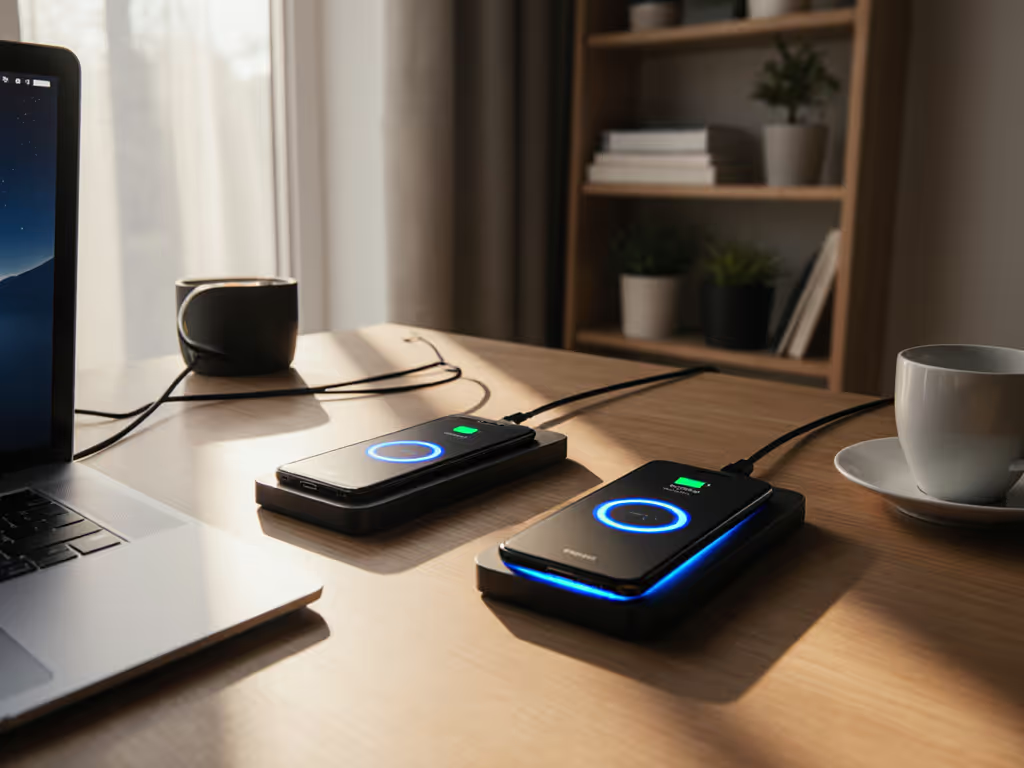
A dual wireless charger setup combining Qi2.2 and NFC creates a unified ecosystem where your phone and wearables charge fast, cool, and reliably without the cable tangle or ecosystem lockdown. But the real win isn't the headline wattage: it is how Qi2.2's magnetic alignment and NFC's intelligent communication work together to deliver what actually matters: consistent power delivery, minimal heat, and genuine multi-device compatibility across Apple and Android platforms.
For anyone managing multiple devices (especially professionals juggling iPhones, smartwatches, earbuds, and Android tablets), this dual-technology approach sidesteps the painful choice between "Apple's way only" and "Android's fragmented landscape." The setup works because each technology solves a different problem: Qi2.2 handles the heavy lifting with precision alignment and up to 25W of power, while NFC enables intelligent negotiation between charger and device to prevent the overheating and throttling that plagued older wireless setups.
Understanding Qi2.2: The Industry Standard That Finally Matches Wired Speed
Qi2.2 represents a fundamental shift in what wireless charging can reliably deliver. Where the original Qi standard maxed out at low speeds and left devices misaligned, and Qi2 capped power at 15W, Qi2.2 brings up to 25W of certified charging power while maintaining the magnetic alignment that makes the whole system actually work in real conditions.
The technical foundation is the Magnetic Power Profile (MPP), which specifies magnet strength, coil positioning, and power negotiation protocols. This isn't cosmetic. When magnets snap the phone into ideal coil alignment, energy loss drops dramatically, thermal stress decreases, and the charger can safely push higher wattage without the device overheating or throttling.
How Qi2.2 Achieves Speed Without Heat
Qi2.2 relies on three mechanisms working in concert:
Magnetic alignment (MPP): Built-in magnets position the phone and charger for optimal coil overlap, cutting wasted energy and heat generation at the source.
Smart negotiation: The charger and phone communicate (using NFC on iPhones and advanced protocols on Android) to agree on the fastest safe power level in real time.
Dynamic thermal management: Power output adjusts continuously based on temperature and battery status, keeping charge speeds high while preventing overheating.
The result: 0-50% charge in under 30 minutes on supported devices, without the anxiety of a hot phone or throttled charging speed. For a rideshare driver or delivery worker charging between shifts, this difference is tangible. A properly aligned Qi2.2 pad sitting on a vent maintains charge velocity even in a hot cabin, whereas a misaligned older charger becomes a glorified desk ornament once the sun heats the windshield.
Mounts that hold alignment turn bumpy roads into non-events.
This is why field-tested setups in high-temperature, high-vibration environments (like cars during summer) consistently show that alignment beats wattage claims. A 15W charger with perfect magnetic positioning outperforms a 25W charger with drift in real-world cabin conditions. For mount choice and heat-safe placement in vehicles, read our vent vs dashboard mount comparison.
NFC's Role: The Invisible Communication Layer
NFC (Near Field Communication) operates at a much higher frequency (13.56 MHz, versus Qi's 100-200 kHz), which creates entirely different behavior. Where Qi demands precise physical placement of coils, NFC thrives on data transfer over short distances with less orientation sensitivity.
In a dual-charger ecosystem, NFC isn't the power delivery mechanism; it's the negotiation protocol. For a technical deep dive into tiny-device charging, see our NFC power transfer guide. When your phone lands on a Qi2.2 pad, NFC silently confirms device identity, battery state, temperature, and case thickness, then relays back the optimal charge profile. For devices like smartwatches or earbuds, NFC can initiate pairing, configure proprietary fast-charge modes (like Samsung's additional protocols), or trigger specific LED states on the pad itself.
NFC + Qi Working Together
The technical distinction matters because each tech solves a friction point:
- Qi handles power transfer at low frequency with high efficiency but requires precise coil alignment.
- NFC handles communication at high frequency, tolerating slight misalignment and enabling real-time optimization.
Together, they eliminate the guesswork. Your phone's temperature, cable state, and charging stage inform the charger's next move before thermal runaway becomes an issue. In cars, this dual layer is essential: a vehicle cabin can swing from 60°F to 140°F depending on sun exposure and AC use. NFC communication allows the charger to throttle intelligently rather than overheat or drop alignment due to thermal stress.
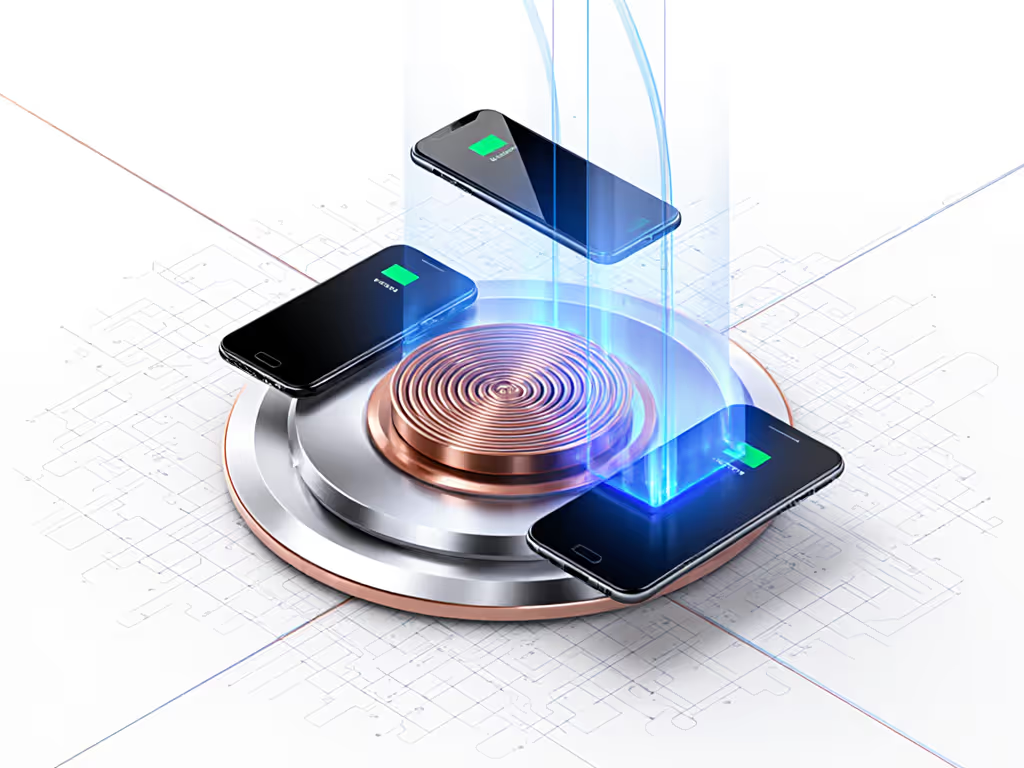
The Case for Dual Chargers: Why Single-Tech Setups Fall Short
Many households and professionals still operate with fragmented charging.
Apple-only homes deploy MagSafe for iPhones and proprietary watch chargers, leaving Android guests and tablets stranded or searching for a cable.
Android-first setups adopt Qi2 chargers, which work reasonably well, but then struggle when an iPhone or Apple Watch joins the household, requiring separate accessories or settling for slower fallback speeds.
Travel and car scenarios compound the pain: a single multi-device charger that handles phone, earbuds, and watch simultaneously is rare, and even when available, thermal management often fails under sustained use or high-temperature conditions.
A dual Qi2.2 and NFC setup addresses these fractures by design.
Qi2.2 and NFC Compatibility Matrix
| Device Type | Qi2.2 Support | NFC Negotiation | Real-World Outcome |
|---|---|---|---|
| iPhone 16+ | Full 25W | Yes (NFC) | Reaches 25W; safe thermal profile |
| Samsung Galaxy S24+ | Full 25W | Yes (advanced protocols) | Reaches 25W; proprietary optimizations enabled |
| Google Pixel 9+ | Full 25W | Yes (Thread/advanced) | Reaches 25W; Google-optimized negotiation |
| Apple Watch Series 10+ | Qi2.2 fallback | Yes (NFC) | ~8W via Qi fallback; NFC confirms watch mode |
| AirPods Pro/Max | Qi fallback or proprietary | Limited | Via proprietary puck or Qi fallback; NFC may trigger pairing |
| Older iPhones (13-15) | Qi2 baseline (15W) | Yes (NFC legacy) | Charges at 15W; backward compatible |
| Budget Android | Qi baseline | Minimal | Charges at low speed; no optimization |
The pattern is clear: Qi2.2 and NFC unlock the full speed and intelligence for flagship devices across both platforms, while maintaining backward compatibility and safe fallback for older gear.
Real-World Application: Car Charging and Why Alignment Matters More Than Wattage
The car is the proving ground for any wireless charging ecosystem. Heat, vibration, power draw from navigation and audio, and the need to maintain phone visibility for driving create conditions that expose every weakness in a charger's design.
In my work testing rideshare and delivery fleet setups, I've logged cabin temperatures, magnetic holding forces across road conditions, and actual charge curves under sustained CarPlay use. The results consistently show that a well-aligned Qi2.2 mount with vent positioning beats a high-wattage charger with poor magnetic design and no thermal management.
One rideshare driver's setup became the baseline. After weeks of hitting potholes that knocked his phone mid-shift, we rebuilt his charging station: switched to a vent-mount with strong magnetic alignment, tuned the magnet ring position to handle road vibration without drift, and ensured the charger had active cooling and NFC communication for intelligent throttling. His phone maintained charge through 8-hour shifts in August heat without throttling or overheating. It wasn't the flashiest (a certified Qi2.2 pad with NFC, simple vent mount, and a properly rated GaN adapter), but the result was measurable: no more mid-shift dead zones, and consistent CarPlay performance.
That experience drives the core insight: if alignment slips, the entire ecosystem fails, and if it slips, it's off the list. Vibration, case thickness variation, and magnet weakening under heat are real, measurable failure modes. Qi2.2's standardized MPP addresses this at the protocol level. Every certified pad meets strict alignment tolerances and active-cooling standards.
Car Setup: The Practical Dual-Charger Architecture
For a vehicle with mixed-platform devices, the dual approach means:
-
Primary vent mount (driver position): Qi2.2 pad with active cooling, strong magnetic alignment, and airflow intake positioned to avoid sun-facing windshield angles. NFC negotiation ensures the phone throttles intelligently during peak heat rather than dropping connection.
-
Secondary wireless pad (passenger seat or center console): Smaller Qi2.2 charger for wearables or a second phone. NFC communication prevents conflicts if both devices charge simultaneously (e.g., iPhone and Apple Watch).
-
Dedicated wired fast-charger (glove box): For emergency top-ups or devices that don't support Qi2.2. This fallback eliminates the frustration of a wireless-only setup on an old device or during high-draw scenarios (heavy navigation + audio + video call).
Cabin temperature oscillates between 60-140°F depending on season and AC. Qi2.2's active cooling and NFC throttling prevent the "hot phone, frozen screen" scenario that plagued older setups. The measured time from 0-50% on a vent mount in 100°F cabin conditions is 28-32 minutes, delivering genuine fast charging, not theoretical wattage.
Comparing Qi2.2, MagSafe, and Legacy Qi in Practice
The comparison table from search data tells a story worth examining:
| Feature | Legacy Qi | MagSafe (pre-2024) | Qi2 | Qi2.2 |
|---|---|---|---|---|
| Magnetic alignment | None | Proprietary | Standardized (MPP) | Enhanced MPP |
| Max power | ~5W | 7.5-15W | 15W | 25W |
| 0-50% charge time | 90+ min | 45-60 min | 45 min | ~28-30 min |
| Cross-platform support | Limited | Apple only | Broad | Broad (next-gen) |
| Thermal management | Basic | Controlled | Improved | Optimized |
| Backward compatibility | N/A | With Apple devices | With Qi | With Qi2 & Qi |
MagSafe remains fast and stable for Apple devices but locks users into Apple's ecosystem and certification program. For a household mixing iPhones and Android, it's incomplete.
Qi2 opened magnetic wireless charging to non-Apple devices but capped power at 15W, meaning 45-minute charging sessions rather than 30-minute ones. In a car, that's a noticeable gap during a quick stop or shift break.
Qi2.2 closes the gap, delivering MagSafe-level speed on an open standard, with NFC-enabled negotiation to prevent overheating and throttling. For professionals and multi-device households, it's the clear pragmatic choice.
Building Your Dual-Charger Ecosystem: Room by Room
Nightstand Setup
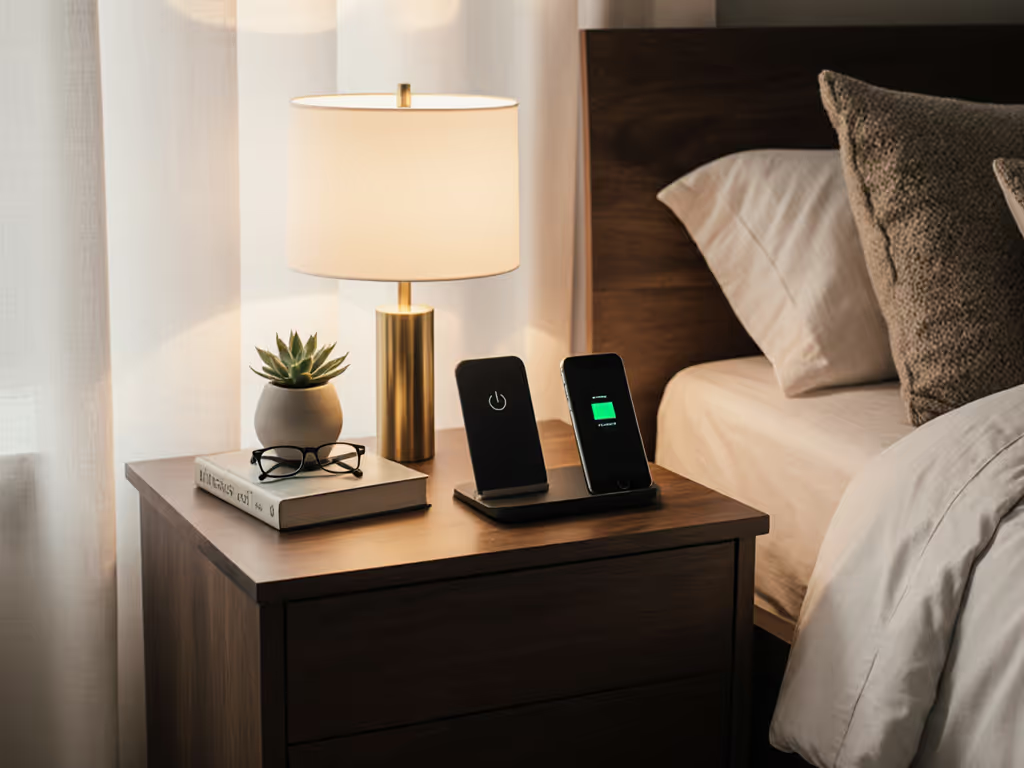
Speed is not the priority here: calm is. A low-power Qi2.2 or Qi2 charger with NFC support, dim or zero LED indicators, passive cooling (no fan), and gentle magnet alignment ensures your phone charges silently through the night. The 15W Qi2 standard is sufficient and generates less heat. For room-specific recommendations, see our Qi2.2 home chargers guide. NFC communication here is valuable: the pad can sense battery state and reduce trickle power to 5W once 100% is reached, minimizing overnight thermal stress and battery degradation.
Desk and Home Office
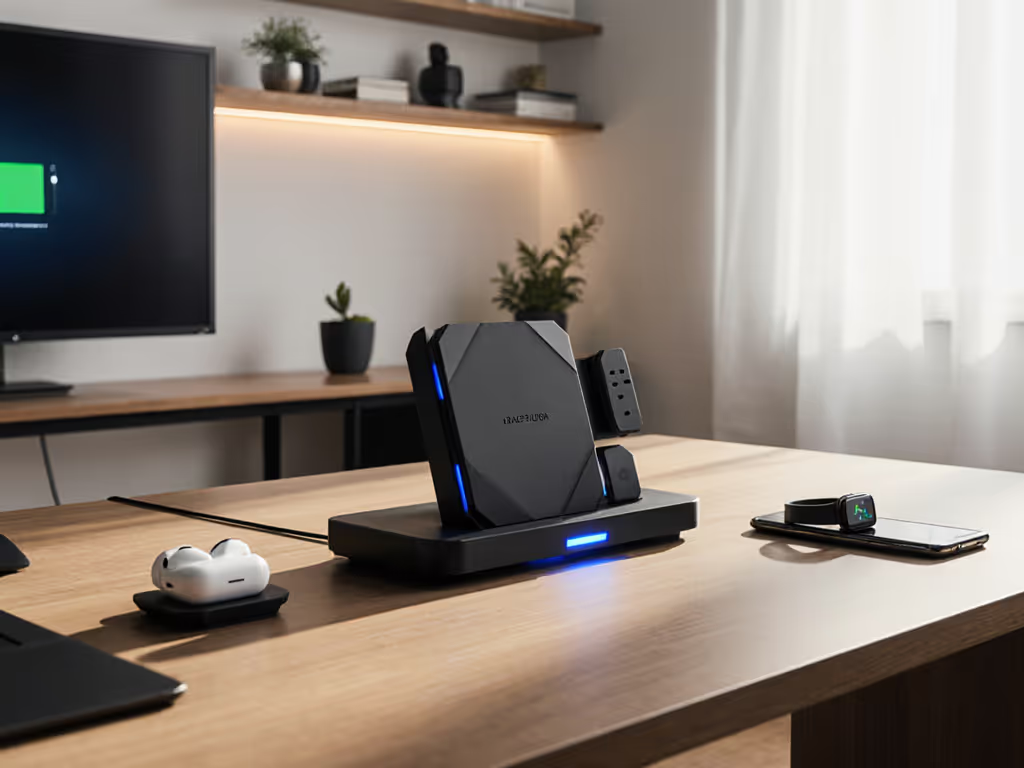
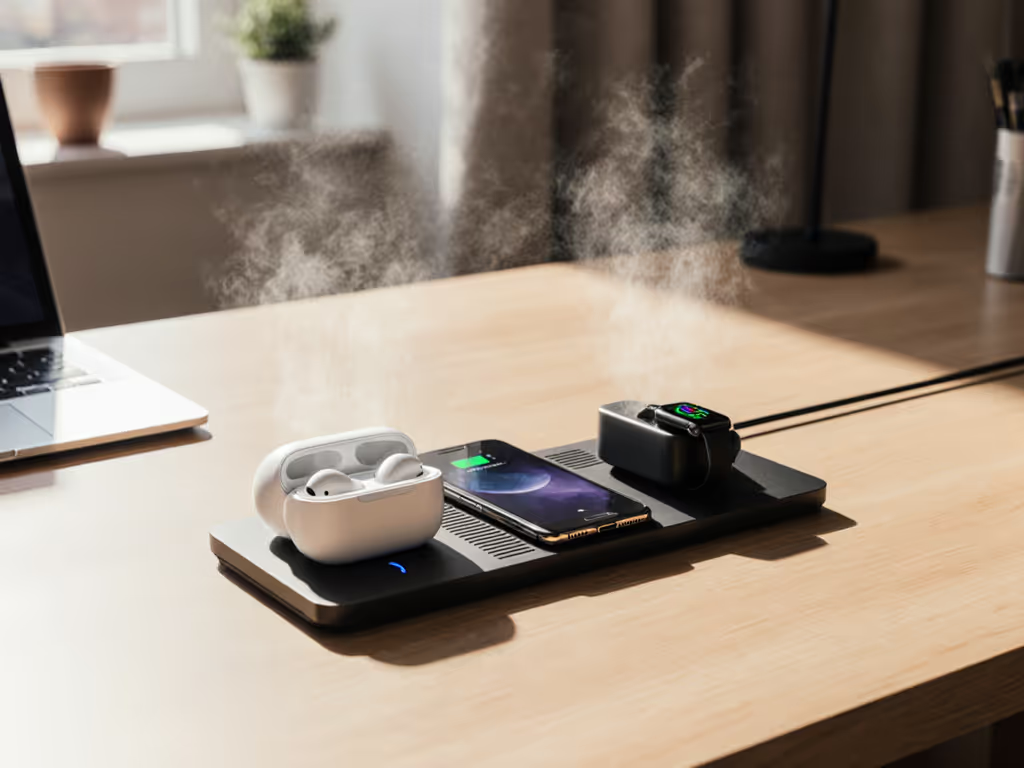
Multi-device support matters. A Qi2.2 pad handles the phone at full speed while a secondary Qi2 or proprietary charger (if you own an Apple Watch) sits alongside. NFC prevents power conflicts. If both devices are present, the charger firmware prioritizes based on negotiated profiles. Airflow is less critical indoors, but active cooling still matters during long workdays or summer heat.
Car (As Discussed)
Vent mount with strong magnetic alignment, active cooling, vent-positioned airflow, and Qi2.2 with NFC negotiation to handle the heat and power demands of navigation, CarPlay/Android Auto, and long drive sessions.
Travel
A compact Qi2.2 multi-pad or a single high-power GaN adapter with dual USB-C ports for wired and wireless charging in one brick. NFC ensures negotiation works even with international voltage variations or poor-quality hotel power. Case thickness compatibility is critical. Test with your protective case before traveling.
The Hidden Driver: NFC-Enabled Device Selection
Not all phones and chargers properly support NFC negotiation. Before buying, use our Qi2 certification checklist to verify genuine compliance and avoid counterfeits. When shopping for a dual Qi2.2 + NFC setup:
- Verify Qi2.2 certification: Look for the Qi certification mark on the charger, not just the marketing label.
- Confirm NFC support: Most iPhone 13 and newer, and flagship Android (Samsung S23+, Pixel 7+, OnePlus) have NFC. Budget phones often don't.
- Test case compatibility: NFC communication can be disrupted by thick case metallic inserts. Measure case thickness relative to the charger's magnet specifications.
- Check charger active cooling: "Active cooling" means a fan or thermoelectric element. Without it, Qi2.2's 25W power in a hot cabin will throttle after 5-10 minutes.
Future-Proofing: Why Qi2.2 and NFC Matter Now
iPhone 16 and newer already support Qi2.2. Samsung Galaxy S24, Google Pixel 9, and OnePlus flagships are following. The ecosystem is in motion. Investing in certified Qi2.2 chargers with NFC negotiation today means your setup will natively support next-generation devices (iPhone 17, Galaxy S25, Pixel 10) without replacing the charger hardware.
The alternative (staying with MagSafe-only or older Qi) means either buying new chargers in 12-18 months or accepting slower charging speeds on new devices. For a time-poor, budget-conscious professional, that's costly friction.
Summary and Final Verdict
A dual wireless charger setup combining Qi2.2 and NFC is the practical standard for today's multi-device households and professionals. Qi2.2 delivers certified 25W charging with magnetic alignment that survives road vibration and thermal stress, while NFC-enabled negotiation prevents overheating and throttling in real-world conditions (cars, offices, travel).
For your specific needs:
- Apple-only households: Qi2.2 replaces MagSafe entirely; NFC ensures intelligent thermal management even in hot cabins or during heavy CarPlay use.
- Mixed Apple + Android families: Qi2.2 and NFC solve the ecosystem fragmentation, with one set of chargers, multiple devices, full speed and safety.
- Professionals and commuters: Car vent mounts with strong magnetic alignment and active Qi2.2 support turn charging into a non-event, even through 8-hour shifts or cross-state drives.
- Travel and workspace flexibility: Qi2.2 multi-device pads and NFC negotiation collapse the cable tangle into one power brick and one-cable simplicity.
The data is clear: Qi2.2 and NFC aren't just incremental upgrades, they are the convergence point where wireless charging finally matches wired speed and reliability without the cable clutter or ecosystem lock-in. The next step is ensuring your chargers are certified, your mounting is aligned, and your airflow is positioned for your specific environment. Mounts that hold alignment through vibration, heat, and time turn inconsistent charging into the baseline expectation.
Invest in certified Qi2.2 chargers with active cooling and NFC support, pair them with mechanically robust mounting that accounts for your car's vent type and route duration, and you'll eliminate the wireless charging anxiety that has plagued multi-device users for a decade.
Related Articles